University leaders are considering partnering with the Olympic Committee to construct a wind tunnel.
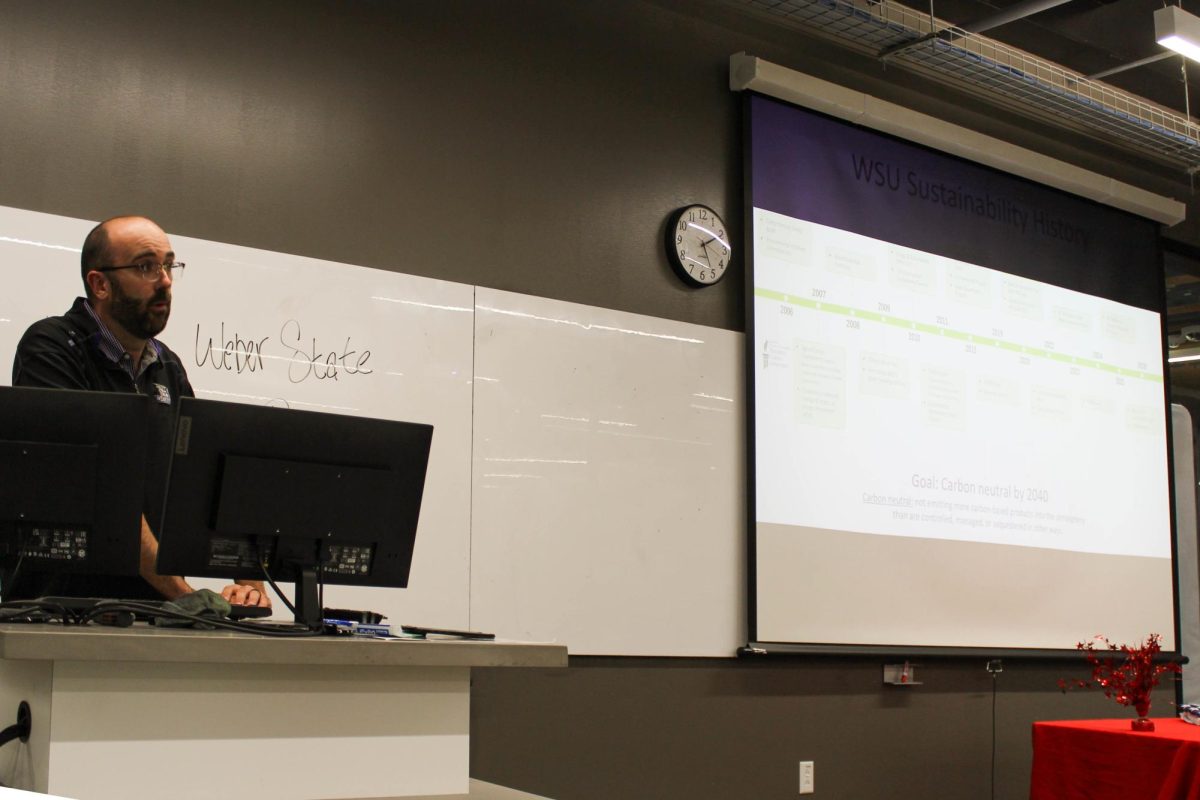
According to Weber State University Director of Operations, Jacob Cain, the project is still in the early stages of development. “There’s a handful of different opportunities that are being explored to see what this could do,” Cain said. Should the tunnel come into fruition it is likely to be used by the engineering, athletics and health professions department.
Jennifer Christensen, a registered nurse at McKay-Dee Hospital, said that wind tunnels are used for research in medical equipment, as well as to test the spread of bacteria and viruses. While she did not have access to this kind of device as a student, she believes it could be beneficial to current and future students. “It would give me a better understanding of how the machines that we use work,” Christensen said.
It could also be used to give students the experience of a negative pressure room. These rooms are used to prevent contagions from circulating back out into the hospital. Emergency rooms are required to have negative rooms and many hospitals will also have them depending on the size.
It may also be used to allow local businesses to conduct research, and the Olympic Committee has expressed interest in using the tunnel for Olympic research.
The Director of the Miller Advanced Research and Solutions Center, Benjamin Garcia, said that the wind tunnels would likely be two tunnels housed in the same facility. One would be a human performance tunnel, used for athletic research and the department of health professions. The other would be a supersonic wind tunnel, capable of reaching Mach eight speeds and used for engineering research. There are only two other tunnels in the U.S. that can reach these speeds, one at Purdue University and one at the University of Notre Dame. The tunnel will help engineering students envision what they are taught, in an applied real world setting.
Besides student use, this tunnel would also be available to industry partners and other labs across the United States. “At the MARS center in particular we design things that need to be tested at these speeds,” said Garcia. He went on to say that other universities such as the University of Utah would also be able to use the tunnel for research. “I think it’s going to mature our capabilities as an organization.”
The Olympic Committee has expressed interest in using the tunnel for Olympic research as well.
Should the wind tunnel be built, the design would likely take a year. With another one to two years for construction in anticipation that it would be operational by 2029. Funding could come in the form of donations or Olympic Committee funding, according to Cain. He said that the project is still very exploratory and there are a lot of things that could disrupt it. “On initial onset it does seem like it has some good potential,” Cain said.