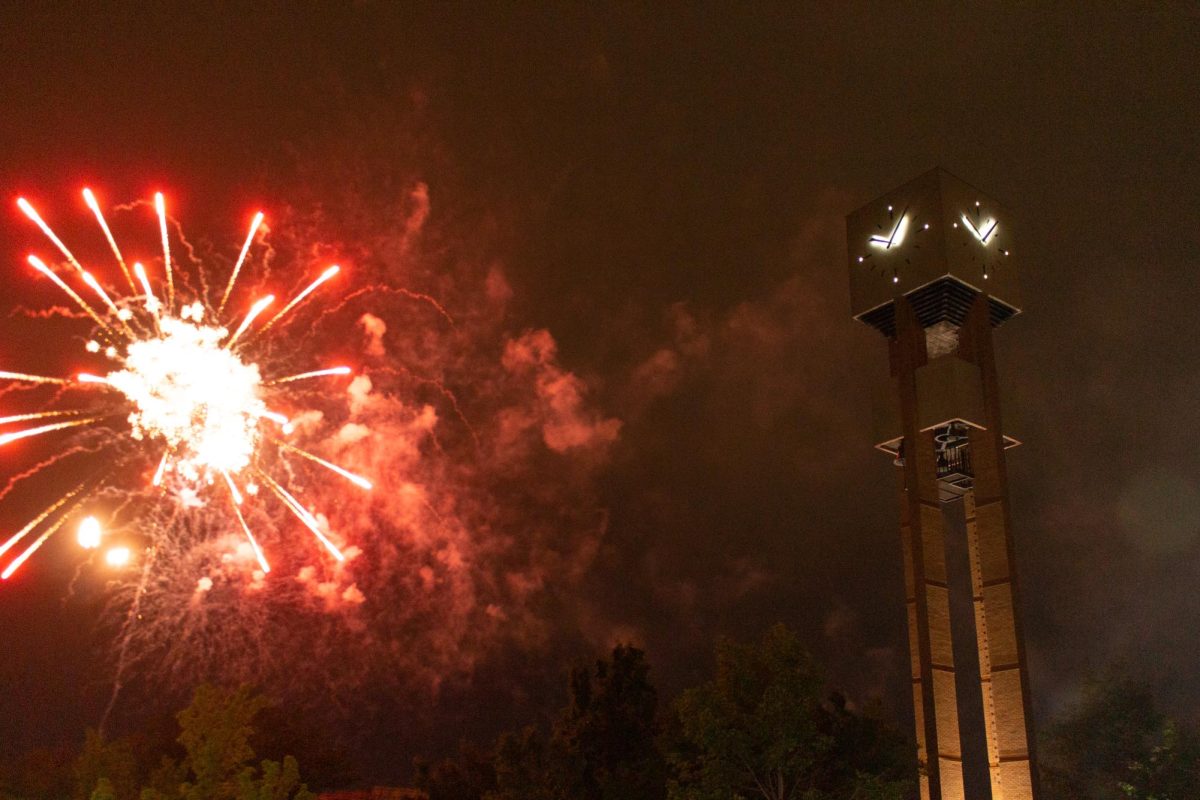
Due to historically high wildfire conditions, Utah operated under a statewide default ban on personal fireworks on Independence Day. The ban was put into effect by an executive order from Gov. Spencer Cox and was in place from June 25 to July 5.
Fireworks were banned on all federal and state-owned lands and unincorporated sovereign lands. Mayors throughout Utah were allowed to designate safe discharge zones for their cities, despite the state’s default of a full, personal fireworks ban.
Some fireworks stands closed early, leaving tents empty long before the holiday. Those that remained open did so because of contracts with fireworks companies.
“We’re about 92% down, maybe 93% in sales compared to previous years,” Jared Bunch said, who runs a fireworks stand with his son.
Bunch said the losses in sales also impacted his ability to hire employees.
“We would lose way too much money just having them here,” Bunch said
Other vendors reported seeing a similar 90% loss in revenue compared to the previous year. Even in cities where personal fireworks were allowed in safe zones, vendors saw a decrease in revenue.
“The first few days, they were pretty similar and once the 3rd hits, I usually see a pretty big spike in sales,” Travis Frye said, adding he started working at the stand to support his newborn twins.
Frye said the expected surge never materialized. He also said carrying fewer fountains than usual also affected sales.
Multiple fires ignited across Utah with causes linked to Fourth of July fireworks celebrations. Brigham City, which did not participate in the statewide ban, had four fires start as a result of personal fireworks use.
Several more fires started in various cities due to both permitted and illegal fireworks use. Fires were reported in Provo and Kaysville because of fireworks, and an investigation is still underway in Layton, where fireworks were found in the area.
Utah permits vendors to be active from June 24 to 25 for Pioneer Day celebrations. Cox’s executive order on June 25 put firework stand vendors in a difficult position, as many had already begun setting up shop or could not back out of corporate contracts.
It has not been decided whether a statewide ban will be put into effect again for Pioneer Day on July 24. Utah is still very high risk for wildfires.
Utah’s wildfire season runs from July to October, putting the holiday in a period of greater risk, amid historic heat.
So far, more than 365 thousand acres have burned, with several fires still burning. Over 75% of wildfires in Utah are ignited due to human activity. Officials are looking into conditions, but guidelines for celebrations are not yet made clear.