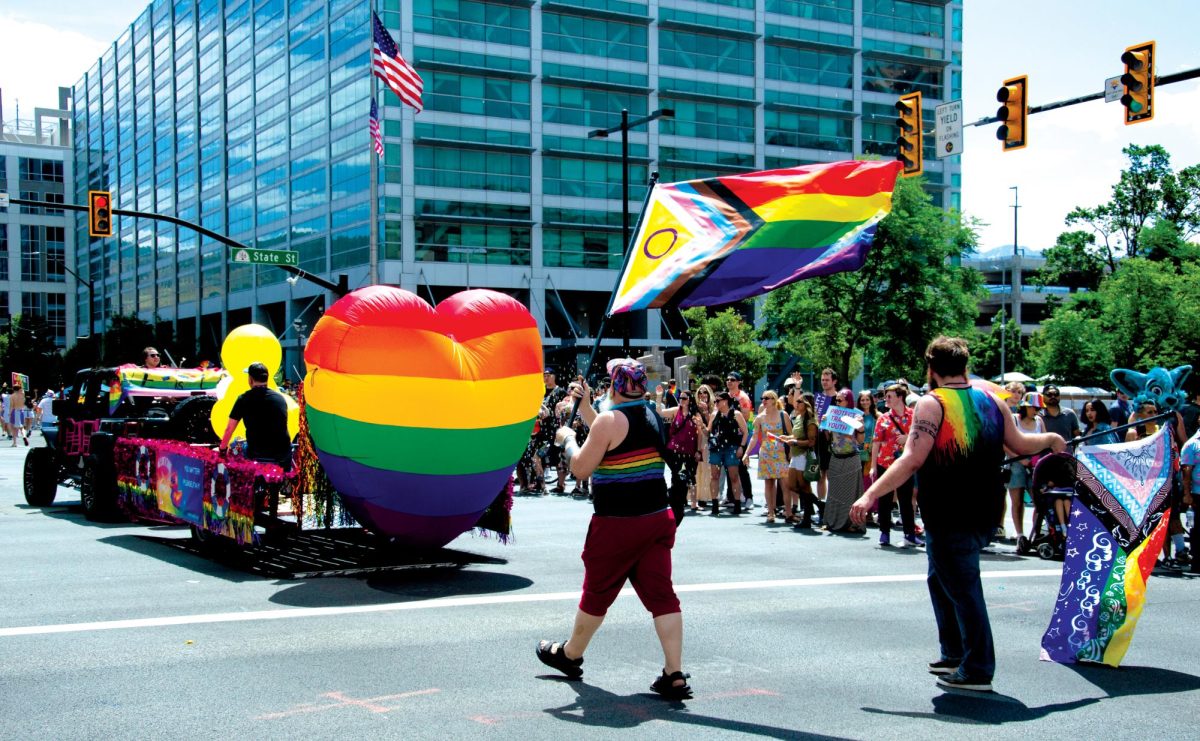
In early June, the Utah Pride Center held its annual Pride Festival at Library Square in Salt Lake City. The celebration featured events like the Pride Parade, foam party and the community festival.
“People call me gay Jesus,” Ryan Barlow said while attending the main festival dressed in a Jesus-like outfit. He said that he was there to represent love, something that he said some people feel Jesus didn’t represent for them.
“There’s so much religious trauma going around that there are a lot of people who really appreciate this image of he who is supposed to represent love, and yet really in their personal experience represented oppression or trauma,” Barlow said. “And so here I am actually showing them love and what Jesus is supposed to represent in the first place.”
Barlow was in attendance at the festival in support of the organization Conversion Therapy Survivor Network, a nonprofit that provides resources and support groups to those who have experienced a form of conversion therapy.
Barlow pointed to sexual orientation and gender identity (SOGI) research that describes conversion therapy taking many different forms, including sessions with a therapist, electroshock therapy and pressures for an LGBTQ+ person to suppress their same-sex attraction or gender identity.
“It’s extremely diverse,” said Sam Nieves, a board member with Conversion Therapy Survivor Network.
Nieves said that conversion therapy can be extremely hard to regulate due to organizations and providers changing the terms used for conversion therapy.
“They’ll always change their terms, like, ‘oh, we’re not doing conversion therapy, we’re just doing gender exploratory therapy,’ right?” Nieves said. “But then when you actually talk to the survivor who just left they said, ‘yeah, they tried to tell me I’m not trans.’”
The Trevor Project, an LGBTQ+-focused nonprofit, released a report looking into the different names used for conversion therapy and they found over 1,300 practitioners across the United States.
“People are told that their true authentic self is not acceptable, is shameful, is dirty or bad somehow, and they go through all sorts of different techniques, and lengths, and depths to try to change themselves, to try to turn themselves into something that they’re not, and all it does is cause trauma,” Barlow said.
Nieves said that his organization can provide community to those who’ve experienced similar traumas and help them heal. Conversion Therapy Survivor Network is run by volunteers, many of whom Nieves said have experienced conversion therapy themselves.
“We’re just doing what we can, survivors helping survivors,” Nieves said. “Whatever survivors need, that’s what we make happen.”